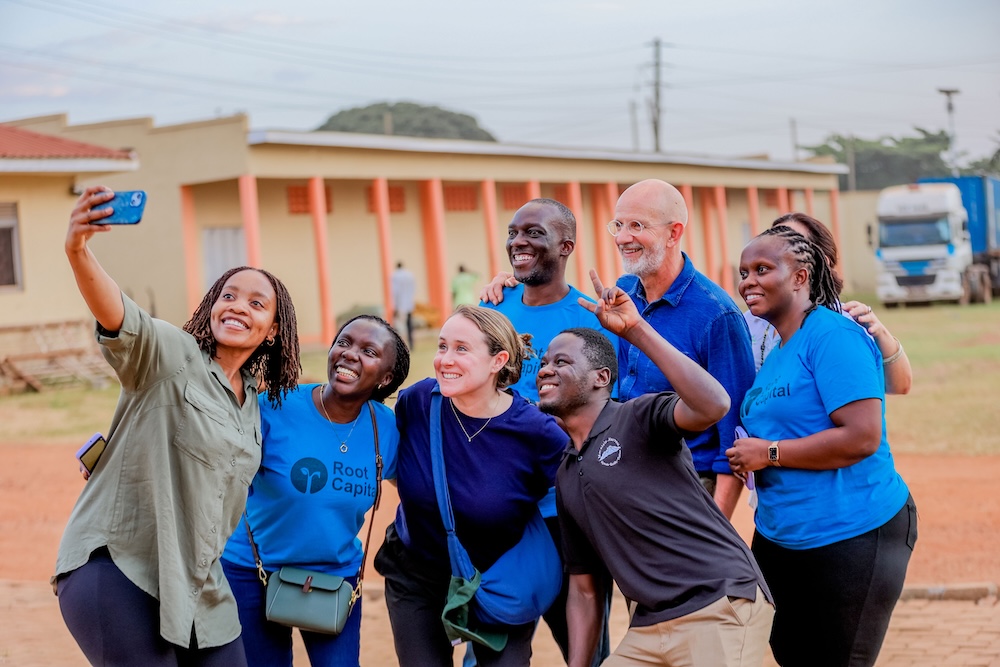
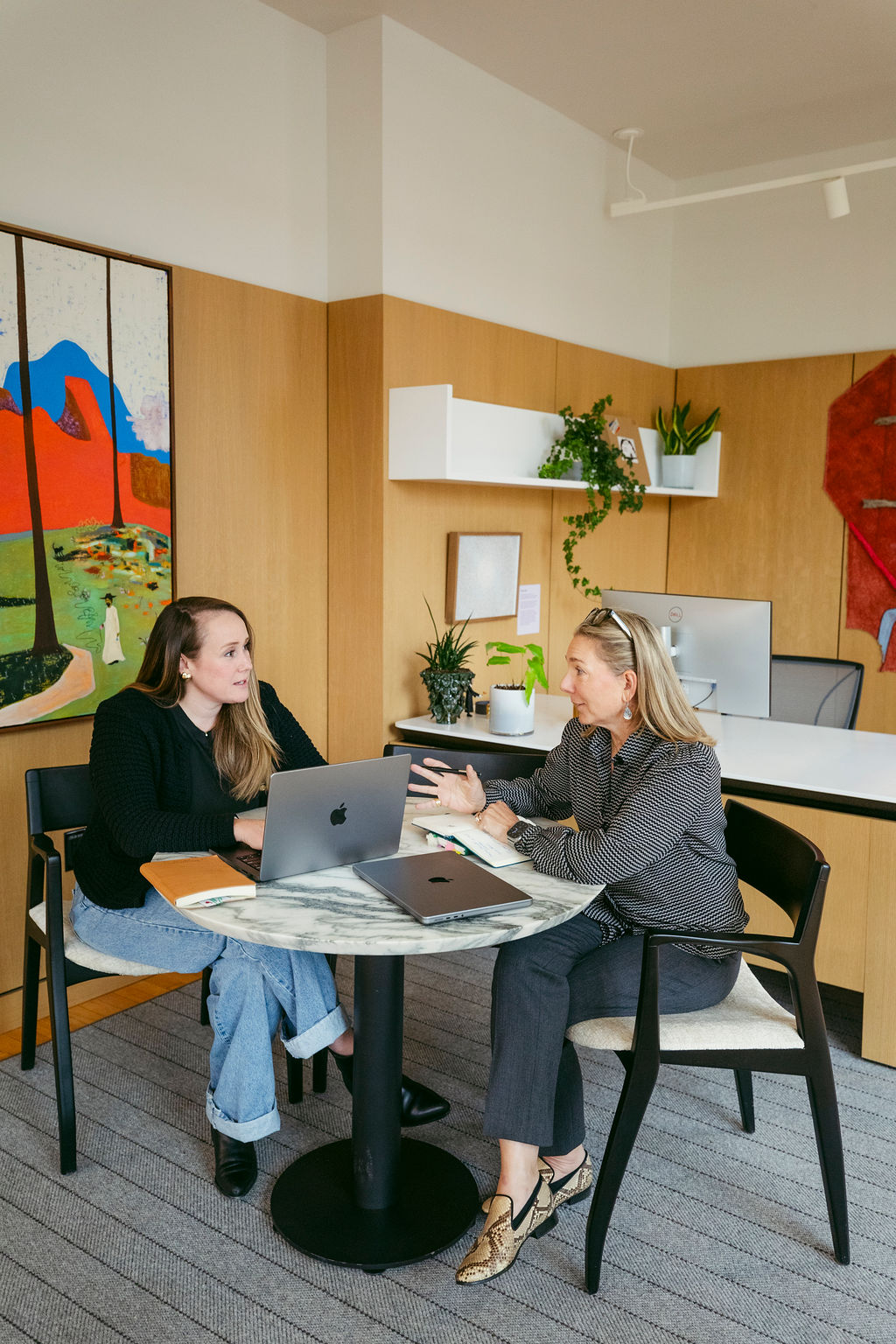
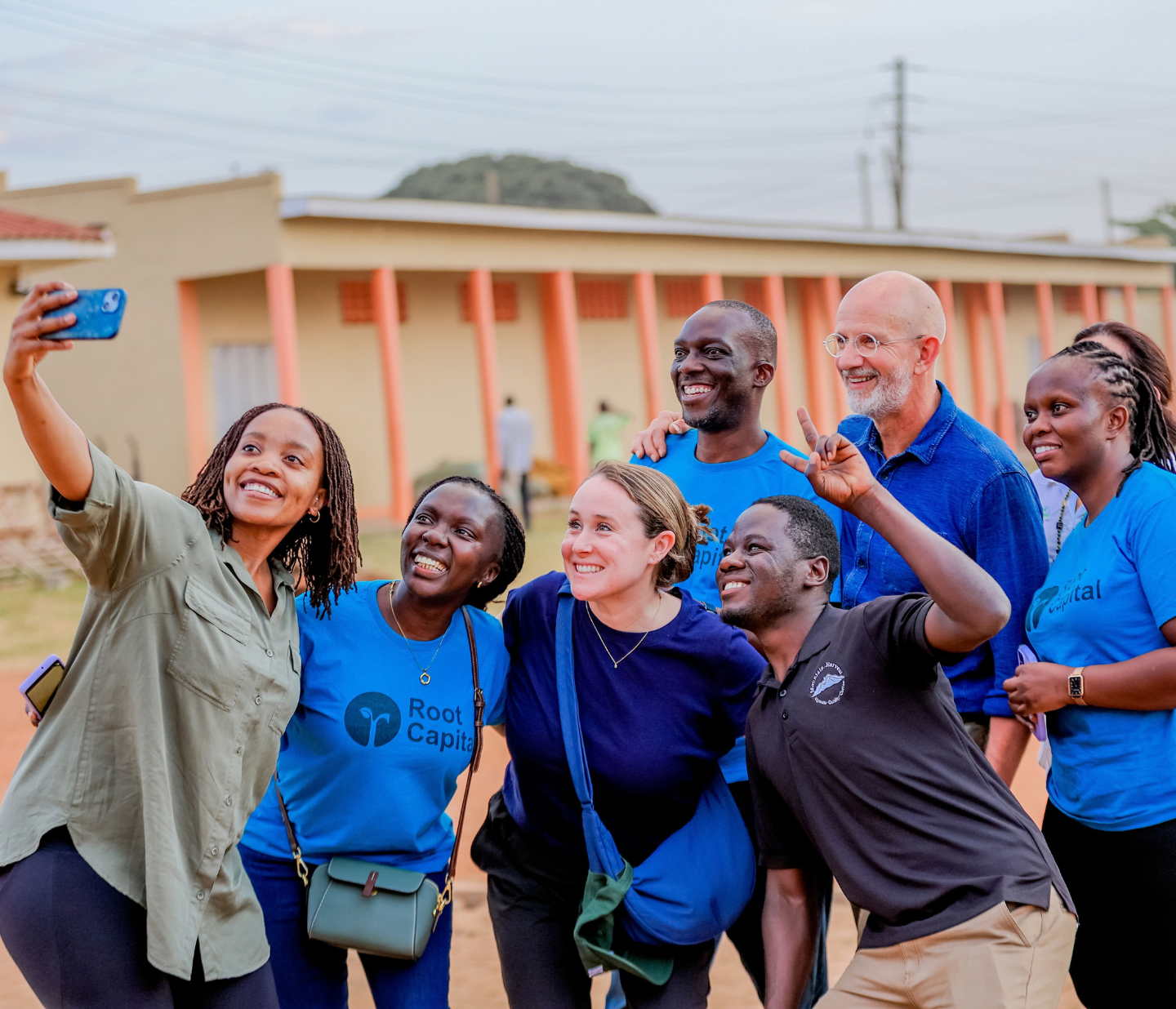
In December 2025, Wagner Foundation’s Executive Director, Caroline Easley and Program Officer of International Partnerships, Ruvimbo Mushavi traveled to Uganda with longtime grantee partner Root Capital.

Root Capital supports small and growing agricultural enterprises through access to credit and technical assistance. Coffee, Uganda’s largest export and a crop grown by over 1.8 million households, sits at the heart of Root Capital’s work.

The following photo essay captures what Caroline and Ruvimbo saw: an impactful partnership with much possibility still ahead. 

A sea of green stretches endlessly before us as we drive through the mountains of the remote Mbale Region in Eastern Uganda. After a long 6-hour drive from Kampala, jet lag is finally loosening its grip thanks to the copious amounts of coffee consumed. The silence in the car has been replaced by cheerful chatter as we look forward to the wonderful work we will witness over the coming days.

A dirt road winds through a lush green hillside covered with tall trees and dense foliage, under a bright blue sky with scattered clouds.
Mount Elgon in all its glory – if you look closely, you’ll see the narrow road we drove to visit the farming communities supported by Root Capital and their clients. Photo: Davidson Ndyabahika
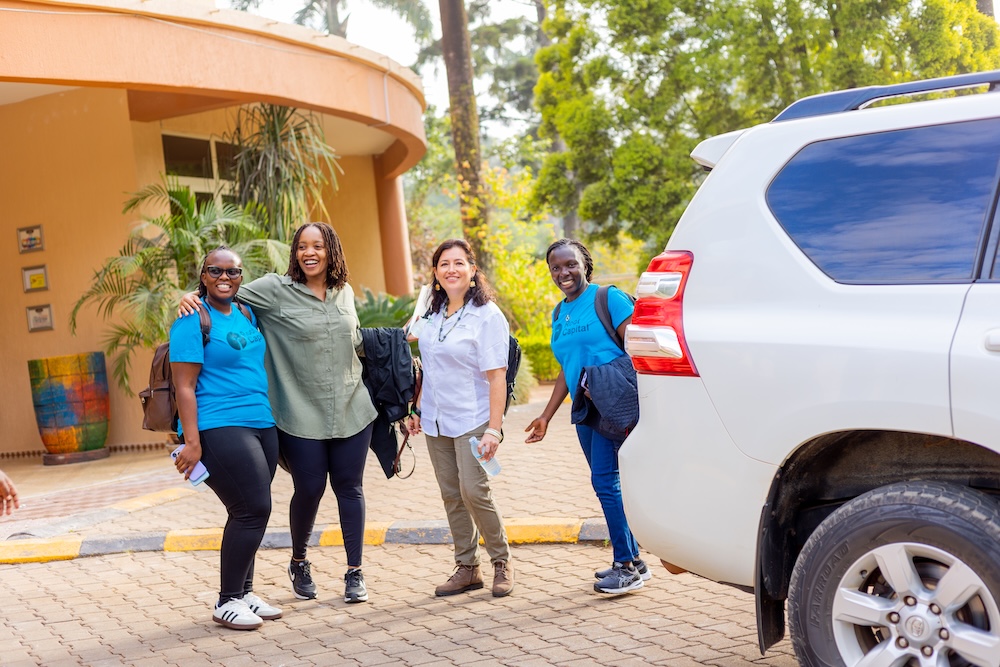
Four smiling women stand together on a paved area next to a white SUV, with trees and a building in the background. Two women wear blue shirts, one wears green, and one wears white.
All smiles as we head out for the day. From left to right: Joan Chenane (Root Capital – Junior Portfolio Manager for East Africa), Ruvimbo Mushavi (Wagner Foundation – Program Officer), Leonor Gutiérrez (Root Capital – Director of Women in Agriculture Initiative), and Rose Ochieng (Root Capital – Head of Advisory for Africa). Photo: Davidson Ndyabahika
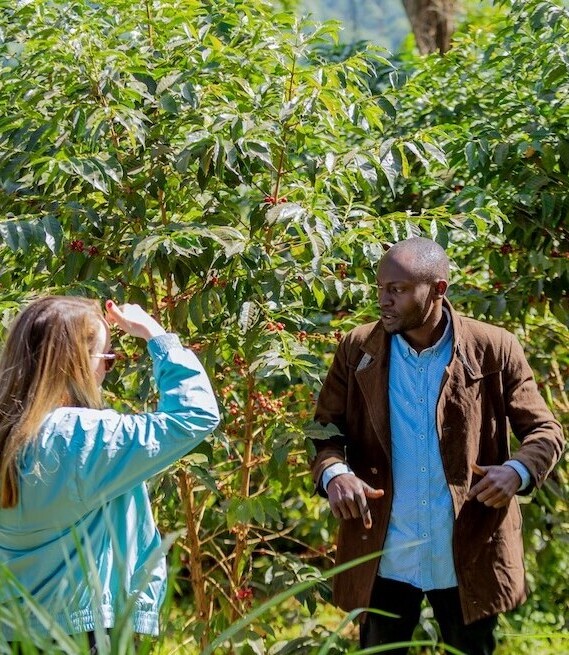
A group of people stands near lush green bushes; one man in a brown jacket appears to guide or explain something. A white sign with text is partially visible among the greenery.
At a demonstration and training farm: Assa, Mountain Harvest’s Lead Agronomist in the Mount Elgon region (center), explains the process of farming coffee and the necessary soil analysis that accompanies it. Photo: Davidson Ndyabahika

Day 1: Working with mission-aligned agribusinesses

Our first day in the field was spent with Mountain Harvest, led by their Managing Director, Kenneth Barigye. Mountain Harvest is an agribusiness working with smallholder farmers in the Mount Elgon region of Uganda to produce and export Arabica coffee. They address the barriers that many smallholder farmers across Uganda face – lack of land, minimal use of inputs and limited access to finance. Through Mountain Harvest’s robust programming, over 850 farmers have a stable buyer who pays 10-30% above local market price for their coffee, helping the farmers provide a better quality of life for their families. Mountain Harvest’s business model and approach to partnership was inspiring: like Wagner Foundation and Root Capital, Mountain Harvest believes smallholder farmers deserve a fair income and a dignified life.

Our visit started at a community demonstration and training farm, where Assa, Mountain Harvest’s Lead Agronomist for Mount Elgon, walked us through the robust process of planting coffee and caring for it through maturity. In the picture at left, Assa details how he and his team carefully test the nutrient and pH levels of the farm soil throughout the year to ensure optimum fertility for producing high-quality coffee cherries. They pass this knowledge to the smallholder farmers they work with to ensure those farmers can apply it to their crops and generate high-quality yields.

Clusters of red and green coffee cherries hang from a branch, surrounded by blurred foliage and sunlight in the background.
When fully red, coffee cherries are considered ripe for harvesting. Photo: Davidson Ndyabahika
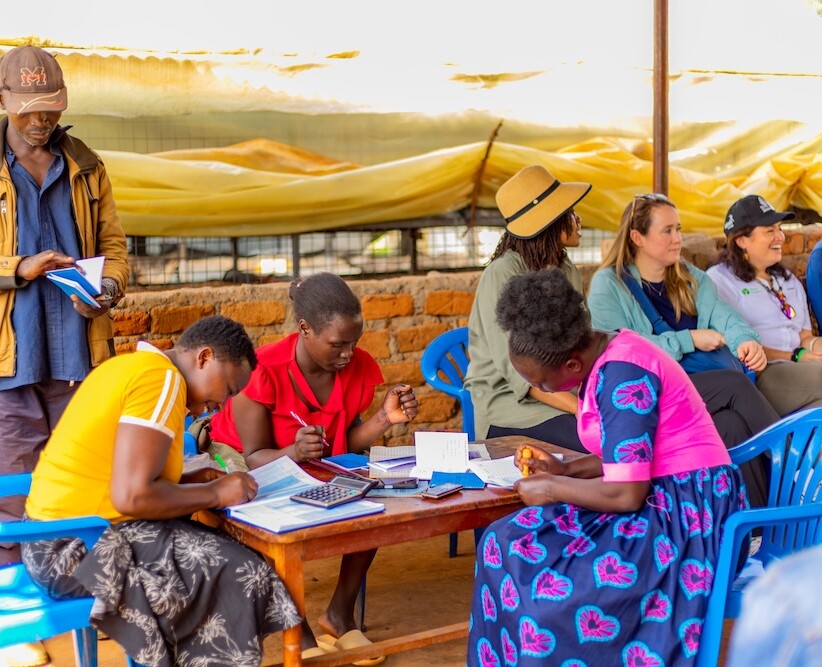
Several people sit around a table, some writing in notebooks, while others sit and observe in the background. The setting appears informal, with colorful chairs and a brick wall behind them.
A group of women tracking their weekly savings as part of a Village Savings and Loan Association (VSLA). Photo: Davidson Ndyabahika

The voices of the Kajere farming community

The next stop was the Kajere community, where we arrived at an open shed to find farmers meeting in small groups to account for their weekly savings. These groups, called Village Savings and Loan Associations (VSLAs), are often established alongside agribusinesses and cooperatives to give farmers a way to save money and bolster their adaptability and resilience. Each week, Kajere farmers gather under the shed and set aside a small portion of their weekly earnings. Their contributions are meticulously recorded in a notebook, then tucked away into a safe with three separate keys, each held by a different person, all of whom must be present to open it. As they pool their savings, members can periodically take out a low-interest loan to cover household needs like school fees, home improvements, or unexpected health costs. For many Kajere farmers, being part of a VSLA has been a lifeline, and we heard from several of them just how much the VSLA has transformed their lives.

From the farm to your cup

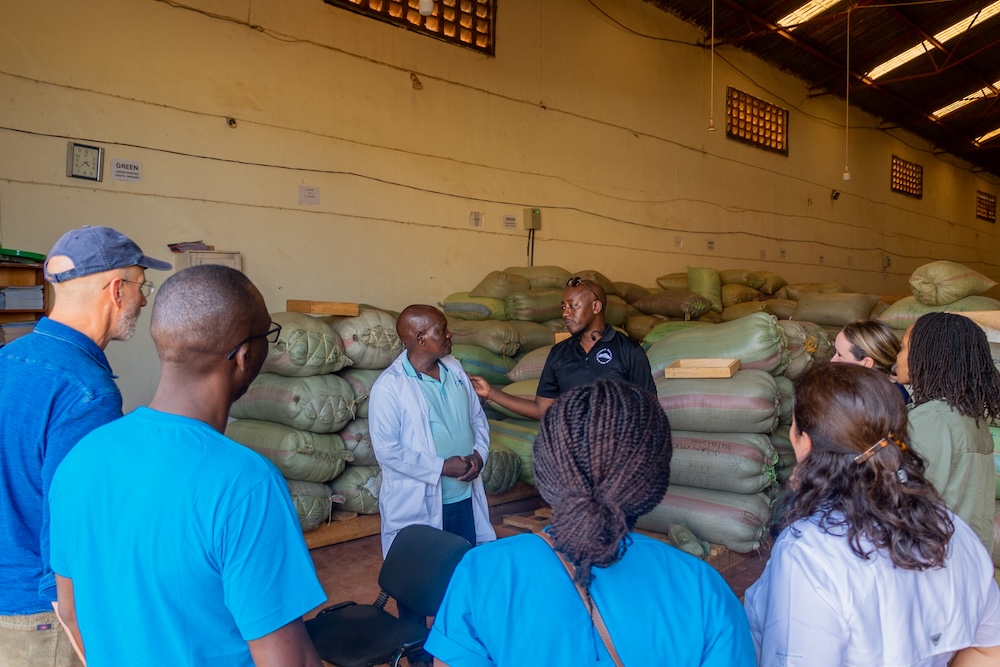
The final stop of the day was Mountain Harvest’s headquarters, where we toured a warehouse stacked floor to ceiling with sprawling bags of coffee beans – mountains, if you will. Each bag was labeled with its packaging date and weight, then placed in the warehouse according to its readiness for export.

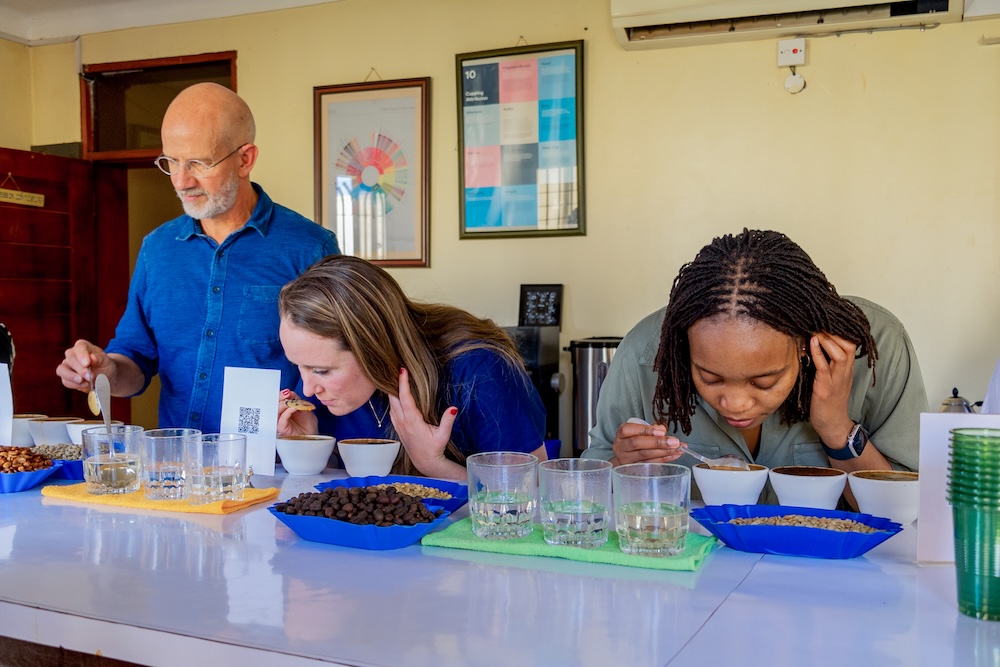
Tucked away in the back of the main building, beyond the warehouse, was the small, quiet coffee cupping lab. Cupping is the industry-standard method for analyzing and evaluating the aroma, flavor, and aftertaste of brewed coffee. This is not just another process; it is art and science in action, and we were eager to participate! Nathan Kotaki, Mountain Harvest’s Quality Manager, walked us through each step with the patience of a saint as we giggled and marveled our way through what is supposed to be a silent, meticulous pursuit. We were far from coffee connoisseurs by the time we left but had gained a deeper appreciation for the coffee that lands in our cups each morning.

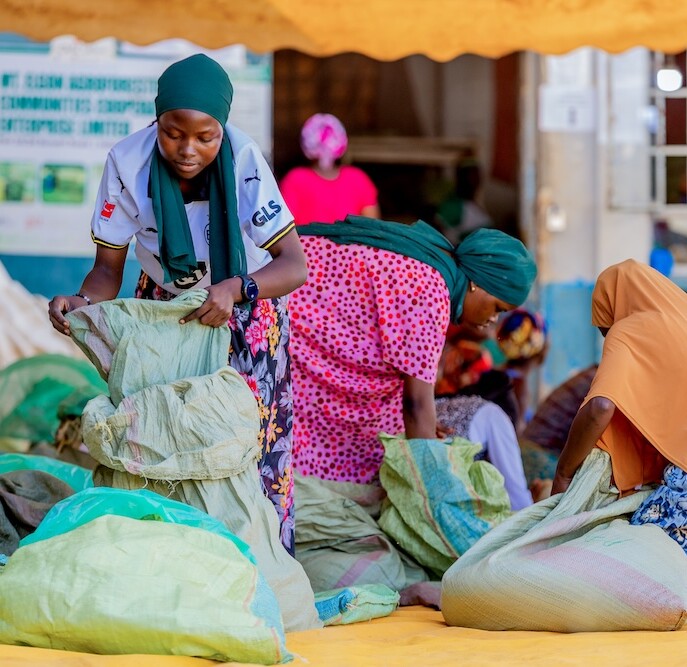
Women sort through large green sacks on a yellow mat, with more people working in the background. Bright clothing and headscarves add color to the busy scene, suggesting a communal or market activity.
MEACCE’s female sorters pack coffee beans into bags for storage and export. Photo: Davidson Ndyabahika

Day 2: Gender equity as a core value for farmer cooperatives

On our second day in Mbale, we visited Mt. Elgon Agroforestry Communities Cooperative Enterprises (MEACCE), a farmer-owned cooperative representing 3,832 coffee farmers and leading producer of premium Fairtrade Organic Bugisu Arabica and conventional Robusta coffee. In addition to loan services, Root Capital provides MEACCE with technical assistance in business management, climate resilience, gender equity, and digital business intelligence, which is core to Root’s model and partnership approach.

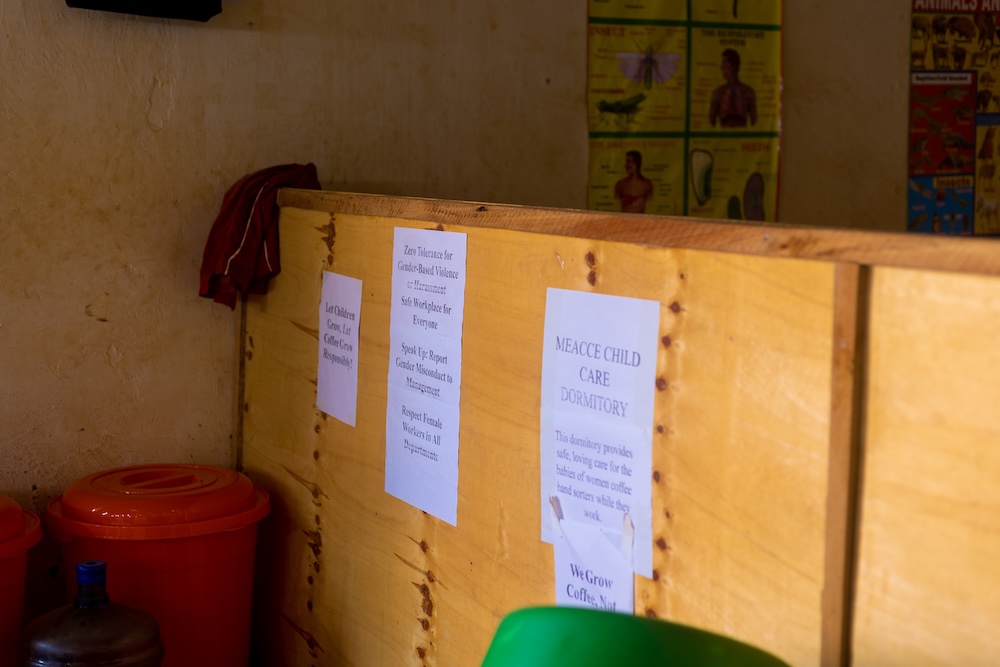
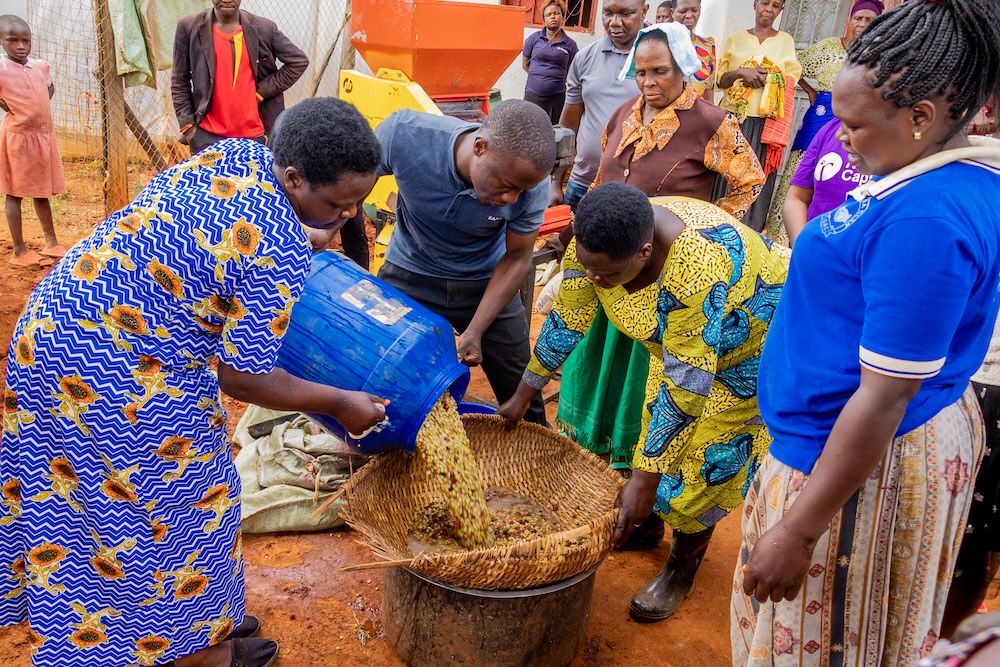
Throughout our visit, MEACCE demonstrated how gender equality is at the core of their work – from leadership and operations to coffee bean sorting and packaging. For women in this region, job opportunities often come with an impossible choice: work and earn an income or stay home to care for their young children. MEACCE eases that burden for their female coffee sorters by providing a dedicated space for children to play and be cared for while their mothers work.

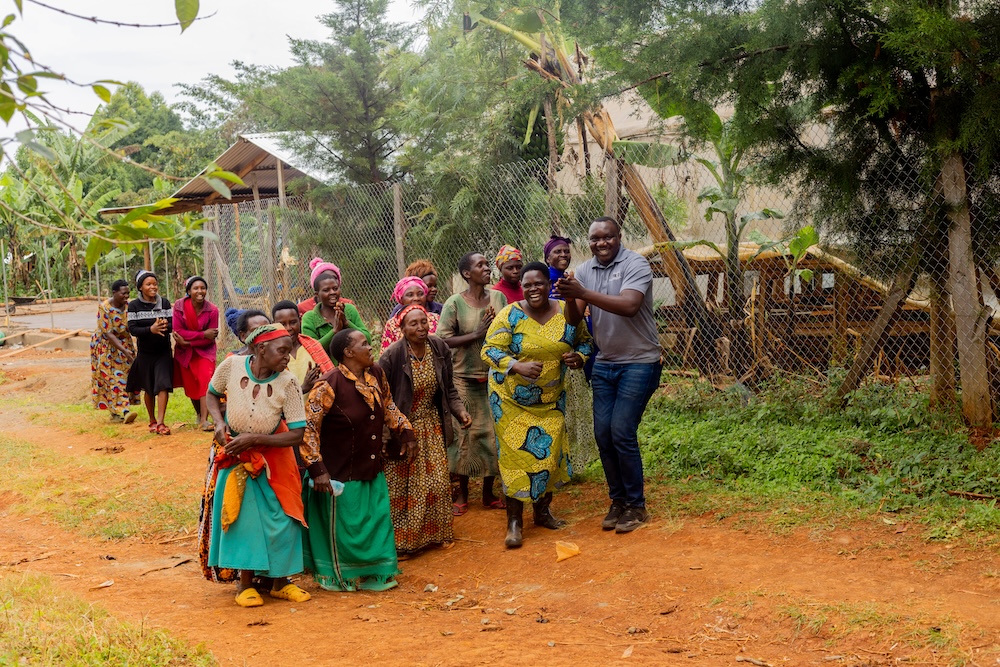
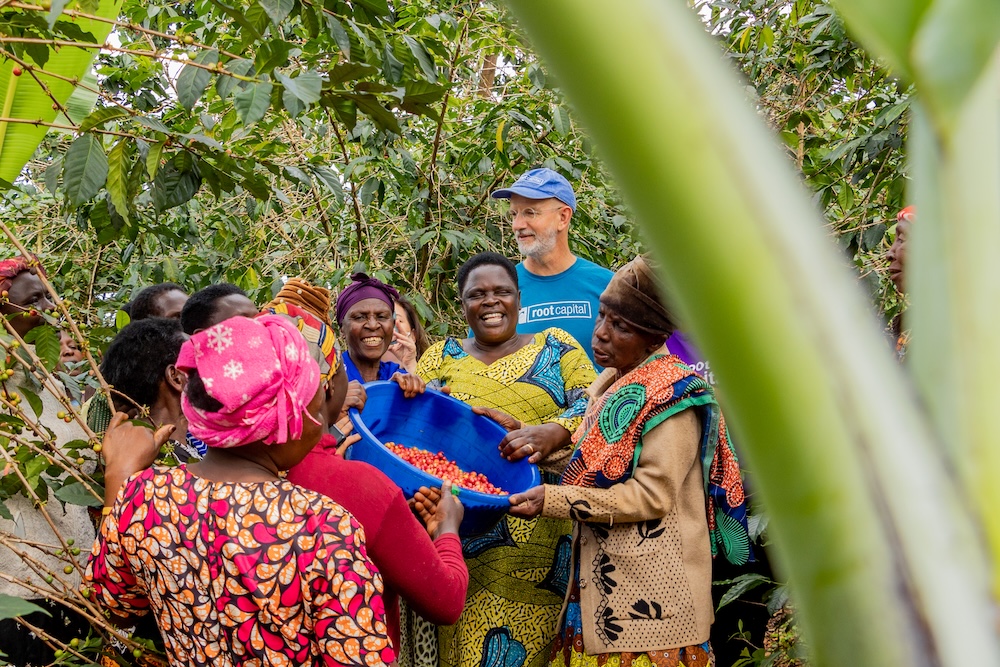
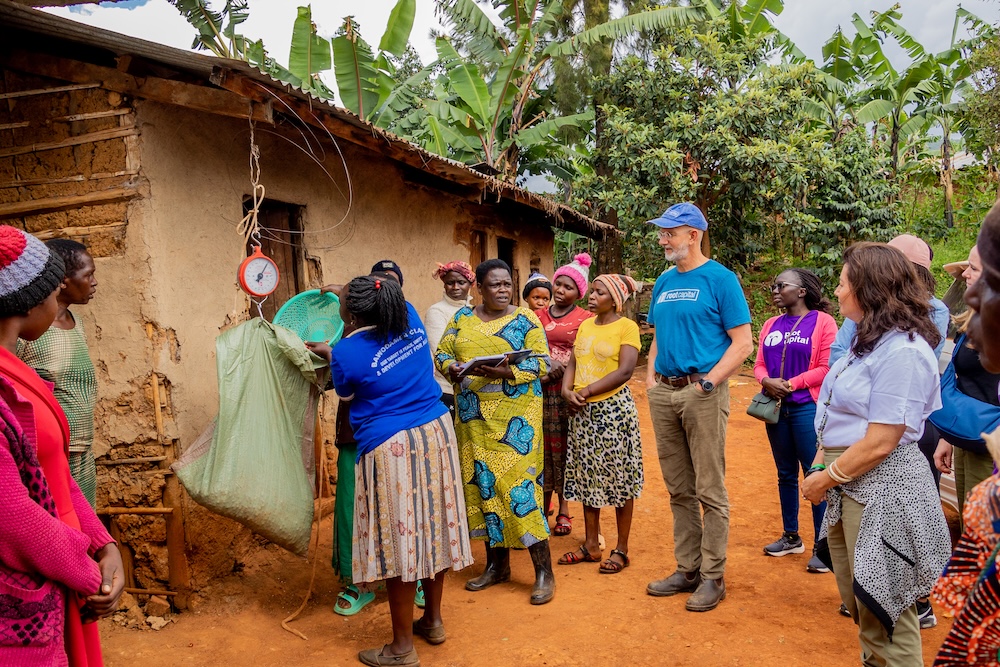
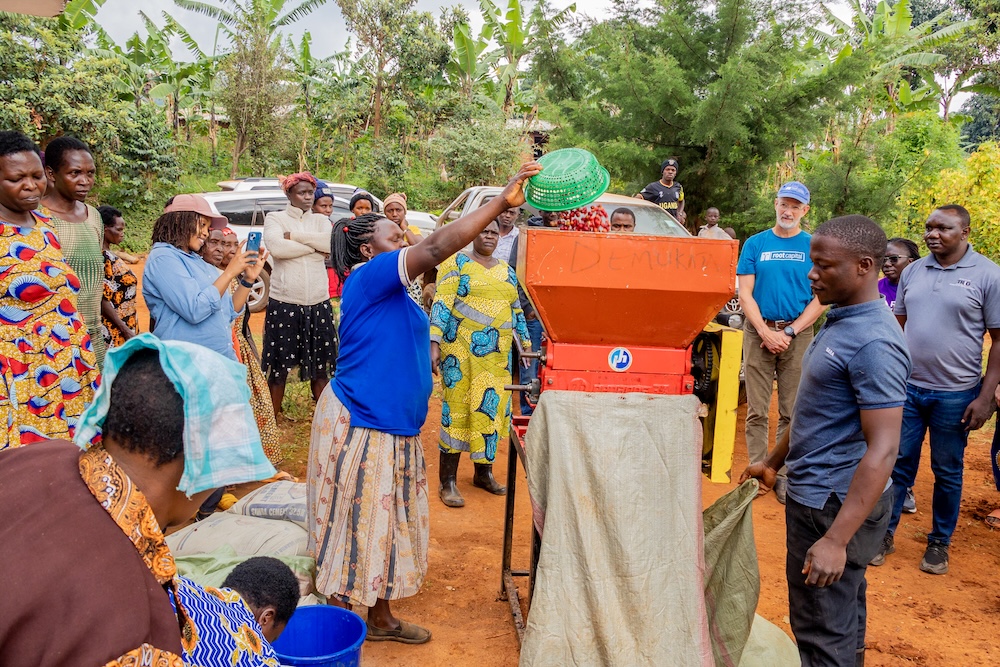
While visiting MEACCE, we met with farmers at the cooperative’s Bunabude Micro Washing Station and coffee processing facility. After we were welcomed by a joyous chorus, the farmers walked us through their process: picking the ripe coffee cherries by hand, washing them thoroughly, passing them through a pulping machine, and finally laying the beans out to dry for several days. The farmers then graciously led us back to a community meeting space where they shared more about their work and involvement in the cooperative.

A group of women and one man smile and walk together on a dirt path outdoors, with trees, plants, and a wire fence in the background.

A joyous welcome to MEACCE’s Bunabude Micro Washing Station. The farmers greeted us with song and dance and encouraged us to all join in on the fun. Photo: Davidson Ndyabahika

A wooden partition with printed notices attached, orange bins below, and colorful educational posters on a yellow wall in the background.

Posters outlining the MEACCE childcare area. Photo: Davidson Ndyabahika

MEACCE Bunabude Micro Washing Station Demonstration

Day 3: The intersection of health and agricultural livelihoods

Back in Kampala, we brought together Root Capital and one of our health equity partners, Seed Global Health, who partners with governments, health facilities and universities to strengthen health systems with a special focus on strengthening the professional health workforce. Over dinner, we discussed how inextricably linked agricultural livelihoods and health equity are in rural communities.

In Wagner Foundation’s own work over the past 20 years, we have seen that the same person receiving treatment from a local community health worker is often also a farmer working to produce crops and earn fair-market income for their family. Since agriculture is rural communities’ primary source of income, food security, and health outcomes, this reality reinforces the importance of integrating health and agricultural livelihoods.

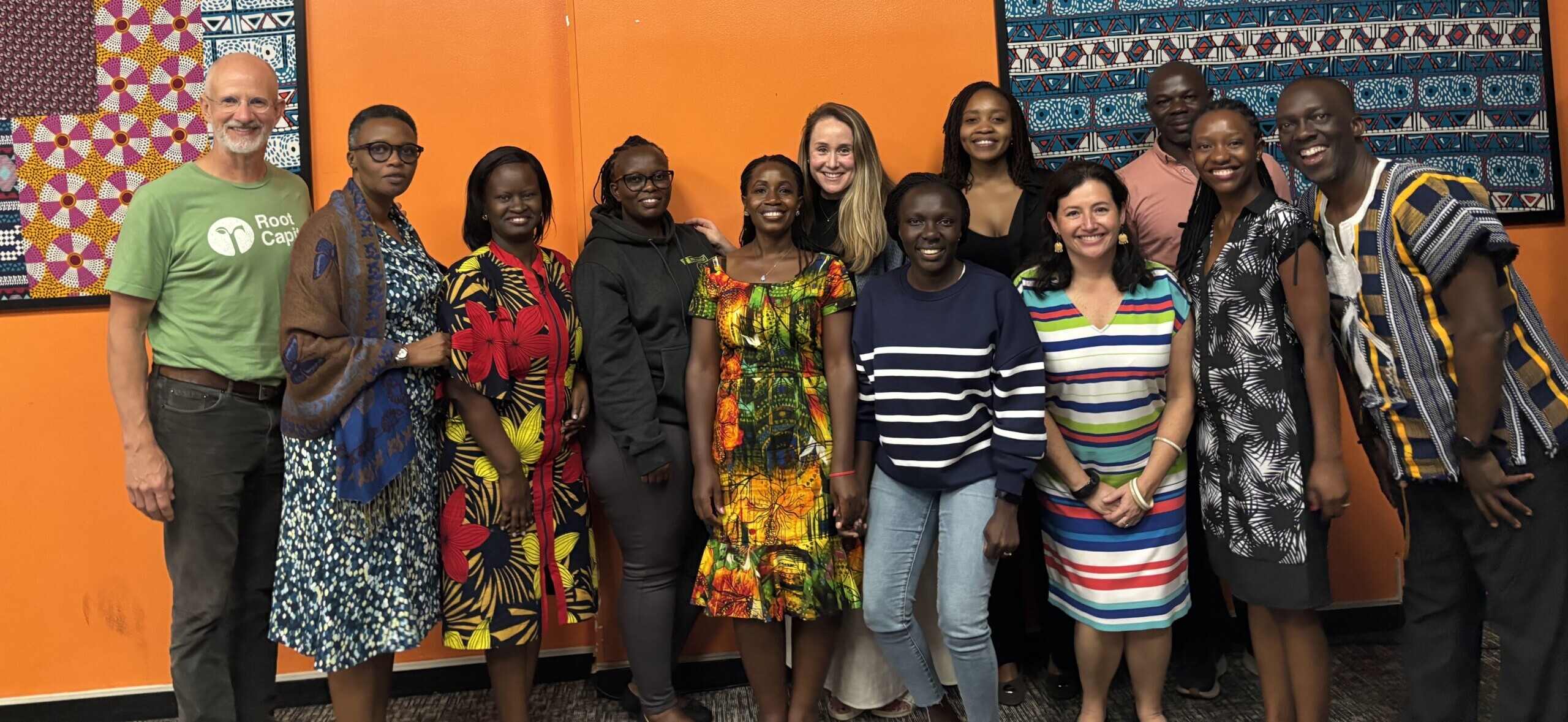
A group of thirteen people stand smiling in front of a bright orange wall decorated with colorful patterned textiles. They appear happy and relaxed, posing together for a group photo indoors.
(L-R) Willy Foote (Root Capital – Founder & Chief Executive Officer), Angelique Karekezi (RWASHOSCCO – Managing Director), Irene Atuhairwe (Seed Global Health – Uganda Country Director), Joan Chenane (Root Capital – Junior Portfolio Manager for East Africa), Hellen Nayebare (Root Capital – Business Intelligence Advisory Consultant), Caroline Easley (Wagner Foundation – Executive Director), Rose Ochieng (Root Capital – Head of Advisory for Africa), Ruvimbo Mushavi (Wagner Foundation – Program Officer), Leonor Gutiérrez (Root Capital – Director of Women in Agriculture Initiative), Deogratius Mugisa (Root Capital – Business Management Advisor), Jackie Nanteza (Seed Global Health – Senior Manager, Partnerships and Grants), Peter Onguka (Root Capital – Vice President for Programs, Africa & Asia). Photo provided.

Day 4: Health systems strengthening in partnership with the Ministry of Health

The following day, we visited Seed Global Health’s Kampala office with Leonor Gutiérrez, Director of the Women in Agriculture Initiative at Root Capital, to learn more about the public health system in Uganda. The country faces significant healthcare challenges, including a shortage of skilled health workers, high rates of maternal and newborn mortality, and an increasing demand for emergency and specialized medical care. In partnership with the Ministry of Health, Seed Global Health helped launch Uganda’s first emergency medicine residency program and continues to support health systems strengthening through in-service training and mentorship aimed at reducing maternal and neonatal mortality. Dr. John Baptist Waniaye Nambohe, Commissioner for Emergency Medical Services at the Ministry of Health, and Irene Atuhairwe, Seed Global Health’s Uganda Country Director, shared insights on how the introduction of Emergency Medicine specialization has been especially impactful to Uganda’s health system.

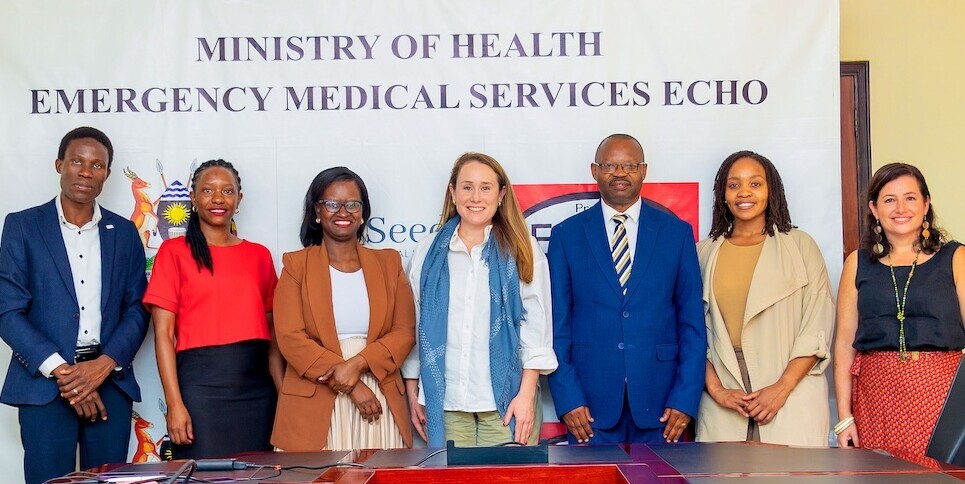
Seven people standing and smiling in front of a Ministry of Health Emergency Medical Services ECHO banner in a conference room.
(L-R) Dr. Jimmy Atyera (Seed Global Health – Emergency Physician & Clinical Associate), Jackie Nanteza (Seed Global Health – Senior Manager, Partnerships and Grants), Irene Atuhairwe (Seed Global Health – Uganda Country Director), Caroline Easley (Wagner Foundation – Executive Director), Dr. John Baptist Waniaye Nambohe (Uganda Ministry of Health – Commissioner for Emergency Medical Services), Ruvimbo Mushavi (Wagner Foundation – Program Officer), Leonor Gutiérrez (Root Capital – Director Women in Agriculture Initiative). Photo: Davidson Ndyabahika
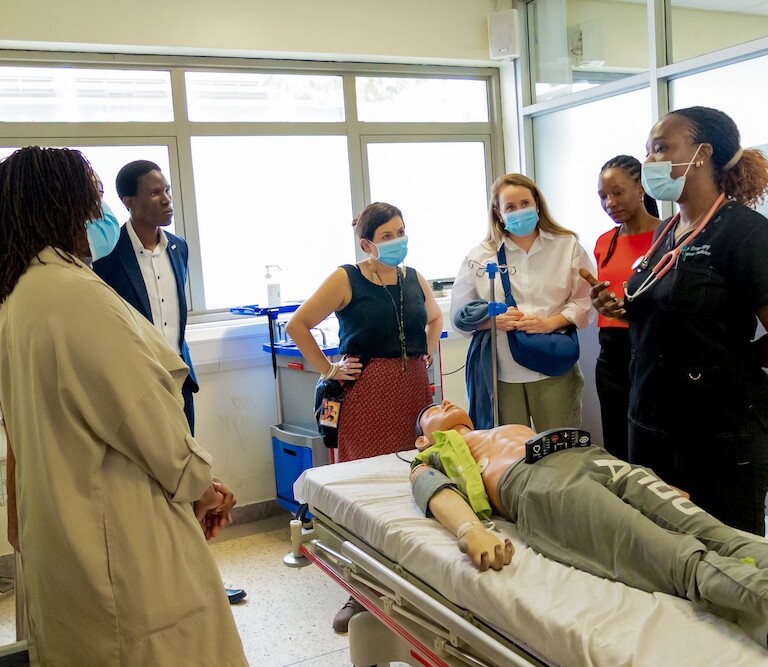
A group of people wearing masks stands around a medical mannequin on a hospital bed, listening to a healthcare professional in a clinical setting.
Dr. Doreen Okong Alaleit (right), a Ugandan emergency medicine doctor at Mulago National Referral Hospital, explains how the simulation laboratory is used to teach emergency medicine and provide ongoing clinical training to emergency doctors and nurses through Seed’s programming. Photo: Davidson Ndyabahika

The office visit was followed by a tour of the Emergency Department at Mulago National Referral Hospital and Makerere University Emergency Medicine Department. We toured the simulation laboratory, which provides a safe and controlled environment for students and medical professionals to practice their clinical skills and learn how to manage real emergency scenarios. Seeing the lab firsthand gave us a new perspective on the pressure doctors are often under and why well-equipped health systems are so critical to emergency care.

Our trip to Uganda reaffirmed one of Wagner Foundation’s core beliefs: real, lasting change happens when partners like Root Capital and Seed Global Health meet communities where they are – placing trust and authority in people with lived experience who know what they need. Progress is about dignity and resilience, and the systems that support both. We remain grateful for the chance to witness this work firsthand, and even more grateful for the partnerships that make it possible.